
The moment my ladle dipped into the steaming pot, I was transported back to a cozy kitchen filled with laughter and the tantalizing aroma of spices. Korean Beef and Radish Soup, or Seogogi Mu Guk, isn't just a dish; it's a warm embrace that brings comfort on brisk evenings. This nutrient-rich, gluten-free soup features tender beef that mingles beautifully with the subtly sweet radish, creating a broth that's both light and fulfilling. On top of being incredibly simple to prepare, this recipe allows for customization based on your taste preferences. Whether you're looking for a soul-soothing weeknight meal or something special to share with friends, this comforting bowl won't disappoint. Could anything be more inviting than a homemade soup that wraps you in warmth? Let’s dive into this delicious journey together!
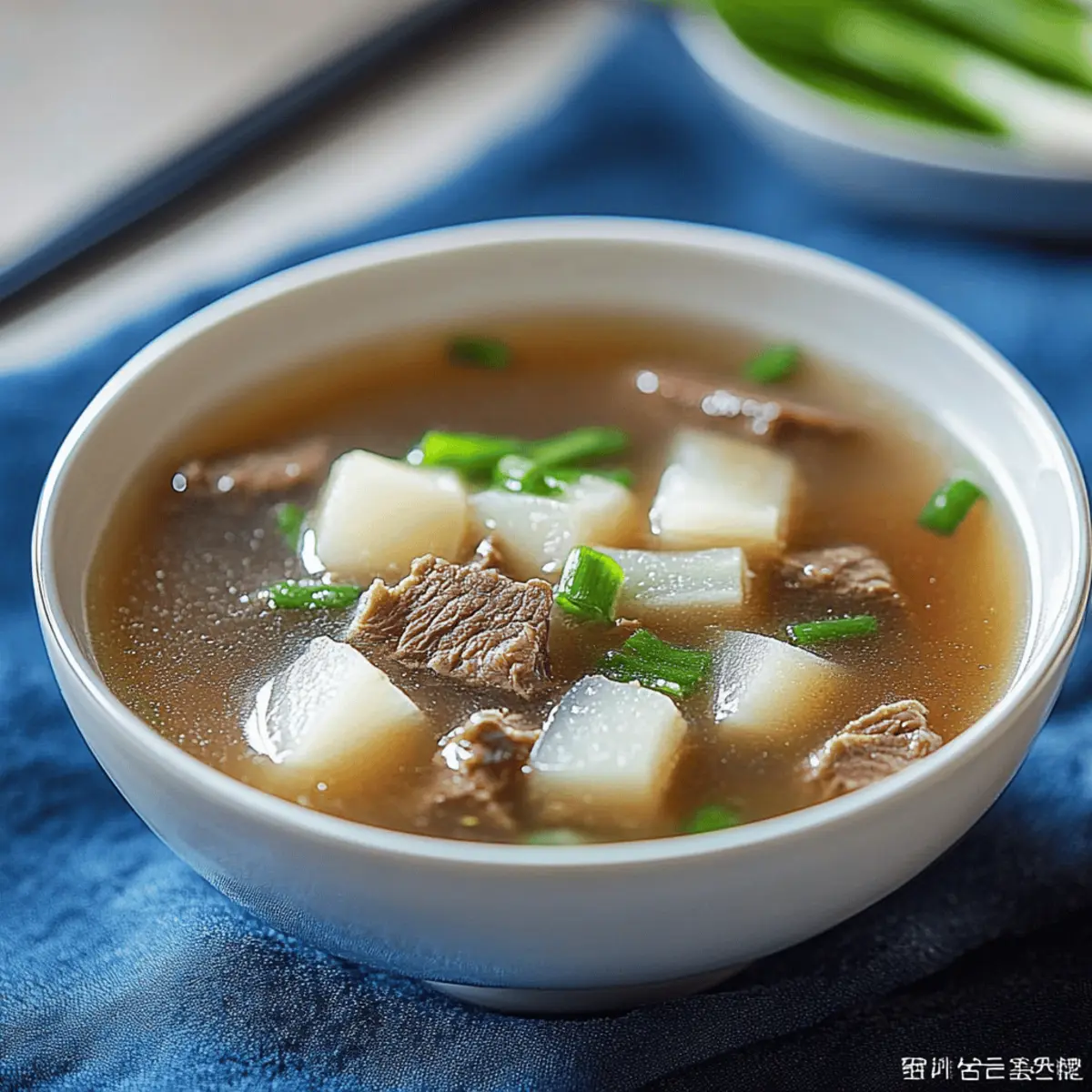
Why is this soup a must-try?
Comforting warmth: This Korean Beef and Radish Soup envelops you in a cozy embrace, making it the perfect dish for chilly nights.
Customizable goodness: Feel free to swap in your favorite ingredients—like shiitake mushrooms for a vegetarian twist!
Crowd-pleaser: It's a dish that appeals to everyone, from family dinners to special gatherings.
Easy to make: Minimal prep and simple steps mean you can enjoy this nourishing bowl without spending hours in the kitchen.
Flavor explosion: The meld of tender beef and sweet radish creates a savory broth that tantalizes the taste buds.
Dive into this flavorful experience and discover how easy homemade soups can transform your mealtime!
Korean Beef and Radish Soup Ingredients
Experience the simple joy of cooking with these essential components!
For the Soup Base
- Beef (Korean Boneless Short Ribs) – Provides rich flavor and protein; any tender beef cut can work as a substitute.
- Water – Forms the cozy base of the broth, crucial for proper flavor extraction.
- Korean Radish – Adds a hint of sweetness and delightful texture; regular daikon radish can be used if unavailable.
- Sea Salt – Balances flavors, ensuring the broth has the perfect seasoning.
For the Flavor Boost
- Guk Ganjang (or Fish Sauce) – Introduces umami depth to the broth; regular soy sauce with reduced salt can be a good alternative.
- Garlic – Infuses the soup with savory goodness and warmth.
- Sesame Oil – Enhances aroma and richness in the broth; drizzle for garnish or use in sautéing.
For the Fresh Finish
- Green Onions – Adds a pop of freshness and flavor that brightens the dish.
- Sesame Seeds – Sprinkled as a garnish to provide additional texture and a nutty flavor profile.
Gather these ingredients and get ready to create a pot of Korean Beef and Radish Soup that will warm your heart and fill your kitchen with nurturing scents!
Step‑by‑Step Instructions for Korean Beef and Radish Soup
Step 1: Prep the Beef
Begin by placing the Korean boneless short ribs in a large pot and covering them with 6 cups of water. Turn the heat to high and bring the water to a rolling boil. Once boiling, reduce the heat to medium-low and let the beef simmer gently for 40-45 minutes. Skim off any impurities that rise to the surface to keep your broth clear and flavorful.
Step 2: Prepare Radish
While the beef is simmering, take the Korean radish and slice it into thick discs, then cut those discs into small squares. This will help the radish cook evenly, releasing its mild sweetness into the broth. Set the prepared radish aside, ready to be incorporated into your comforting Korean Beef and Radish Soup.
Step 3: Sauté Radish
After the beef has finished simmering, remove it from the pot and set it aside to cool slightly. In the same pot, heat a tablespoon of sesame oil over medium heat. Once hot, add the diced radish and sauté for about 3 minutes, stirring occasionally until the radish becomes translucent. This step enhances the flavor of the radish before adding it back to the broth.
Step 4: Combine Ingredients
Next, return the broth back to the pot with the sautéed radish. Bring the mixture to a gentle boil over medium heat. This allows the radish to infuse its sweetness into the broth while warming it thoroughly. This is where your Korean Beef and Radish Soup really starts to come together, exuding savory aromas.
Step 5: Season Beef
While the soup base is heating, slice the cooked beef into bite-sized pieces. In a mixing bowl, combine the sliced beef with sea salt, a drizzle of sesame oil, sesame seeds, guk ganjang (or fish sauce), and minced garlic. Toss the beef well to ensure it’s evenly coated, enriching the flavor profile of the beef for your soup.
Step 6: Simmer Together
Finally, add the seasoned beef back into the pot with the radish and broth. Allow it to simmer gently for an additional 10-15 minutes, which will meld all the flavors beautifully. Keep an eye on the radish, tasting occasionally until it reaches your desired tenderness, ensuring every bowl of Korean Beef and Radish Soup is comforting and satisfying.

Make Ahead Options
These Korean Beef and Radish Soup preparations are perfect for meal prep enthusiasts! You can chop the Korean radish and slice the beef up to 24 hours in advance to save time on busy weeknights. Simply refrigerate them in separate airtight containers to maintain their freshness. Additionally, you can cook the beef and store it in the broth for up to 3 days; this allows the flavors to deepen while keeping the beef tender. When you're ready to enjoy, just reheat the soup on the stovetop over low heat until warmed through, adding the sautéed radish for the final touch. This way, you’ll have a delightful, homemade Korean Beef and Radish Soup that’s just as delicious on your busiest days!
Korean Beef and Radish Soup Variations
Feel free to tailor this comforting soup to suit your tastes or dietary needs with these delightful variations!
- Vegetarian Delight: Swap the beef for shiitake mushrooms or a medley of your favorite vegetables to maintain the umami flavor without the meat.
- Spicy Kick: Incorporate fresh chili slices or a splash of gochujang to elevate the heat level to your liking, bringing an exciting warmth to each bite.
- Coconut Creamy: Stir in a few tablespoons of coconut milk for a rich, creamy twist that adds depth and a hint of sweetness.
- Hearty Additions: Toss in some chopped bok choy or spinach for an added boost of greens, enhancing both texture and nutrition for a heartier soup.
- Noodle Nest: Add some cooked Korean glass noodles or soba into the broth just before serving to create a more filling, comforting meal.
- Savory Depth: Sprinkle in a dash of smoked paprika or a bit of Worcestershire sauce to deepen the broth's flavor profile, making each spoonful incredibly satisfying.
- Garnish Galore: Experiment with toppings such as chopped cilantro, crispy shallots, or even a drizzle of chili oil to personalize your soup and enhance visual appeal.
Let your culinary creativity flow, and don't hesitate to explore endless possibilities with your version of this delicious Korean Beef and Radish Soup. Such enriching variations not only elevate your dinner table but also keep your culinary adventures exciting! If you love discovering new flavors, be sure to check out our selection of hearty homemade soups that are equally comforting and delicious!
What to Serve with Korean Beef and Radish Soup?
The perfect meal companions elevate your soup experience, turning a cozy dinner into a delightful feast.
-
Steamed White Rice: A classic partner that soaks up the flavorful broth, providing a comforting base. It adds a satisfying texture and helps balance the savory taste of the soup.
-
Kimchi: This spicy, fermented side dish introduces a zesty crunch, enhancing the overall flavor profile. The tangy notes of kimchi beautifully contrast the rich broth, creating a rounded meal.
-
Roasted Seaweed Snacks: These crispy, salty treats offer a delightful crunch alongside the soothing soup. Their lightness complements the warm broth without overpowering it.
-
Korean Pancakes (Jeon): These savory pancakes bring a satisfying chewiness and a variety of flavors depending on the fillings used. They make for a delectable pairing that can be shared among family or friends.
-
Cucumber Salad: A refreshing, tangy cucumber salad lightens the palate and offers a cool contrast to the warm soup. It's a delightful way to incorporate fresh flavors into your meal.
-
Herbal Tea: Sipping a warm herbal tea, like barley tea or ginseng tea, during or after your meal adds relaxation and aids digestion. Its warm, earthy tones soothe the senses and complete the comforting experience.
Embrace the beautiful harmony of flavors and textures while enjoying your bowl of Korean Beef and Radish Soup—each accompaniment enhances the experience in blissful ways!
Storage Tips for Korean Beef and Radish Soup
Fridge: Store leftover Korean Beef and Radish Soup in airtight containers for up to 3 days. Allow the soup to cool before sealing to maintain quality.
Freezer: Portion the soup into freezer-safe containers or bags, where it will last for up to 3 months. Ensure to leave some space for expansion as the soup freezes.
Reheating: When you're ready to enjoy your soup, gently reheat it on the stovetop over low-medium heat, stirring occasionally to keep the radish intact and the broth clear.
Thawing: For frozen soup, thaw overnight in the fridge before reheating, or use the microwave's defrost setting for quicker results.
Expert Tips for Korean Beef and Radish Soup
-
Tender Meat: Always check the beef for tenderness; it should pull apart easily with a fork. If not, continue simmering for extra time.
-
Flavor Depth: Allow the soup to simmer longer to deepen the flavors. This is particularly important in enhancing the savory notes of the broth.
-
Soy Sauce Swap: Ensure you’re using the correct type of guk ganjang or fish sauce; using regular soy sauce can significantly alter the intended taste of your Korean Beef and Radish Soup.
-
Radish Cooking: Keep an eye on the radish texture. For a softer bite, let them simmer longer; for a crunchier contrast, reduce simmering time.
-
Creative Add-ins: Feel free to experiment with additional veggies like carrots or mushrooms; these can elevate the dish while keeping it gluten-free and cozy.

Korean Beef and Radish Soup Recipe FAQs
What should I look for when selecting radish?
Absolutely! Look for Korean radish (or daikon) that feels firm to the touch without any dark spots or soft areas—those are signs of overripeness. Fresh radishes should have a clean, smooth surface and a vibrant color, which indicates good quality.
How should I store leftover Korean Beef and Radish Soup?
Very easily! Place any leftover soup in airtight containers after it has cooled down. You can store it in the refrigerator for up to 3 days. If you want to keep it longer, consider freezing and enjoy it later!
Can I freeze Korean Beef and Radish Soup?
Of course! To freeze, portion the soup into freezer-safe containers or bags, leaving some space for expansion. It can be frozen for up to 3 months. When you’re ready to enjoy, simply thaw it overnight in the fridge and reheat gently on the stovetop.
What if the beef isn't tender enough?
If your beef hasn't reached the desired tenderness, don't fret! Just return the pot to the heat and simmer for an additional 10-15 minutes. Check for tenderness during this time; the more it simmers, the more delicious flavor develops!
Are there any dietary considerations with this soup?
Yes, indeed! This Korean Beef and Radish Soup is naturally gluten-free, especially if you use gluten-free soy sauce in place of guk ganjang. Always check labels for any allergies, especially for the fish sauce alternatives, as they may contain common allergens.
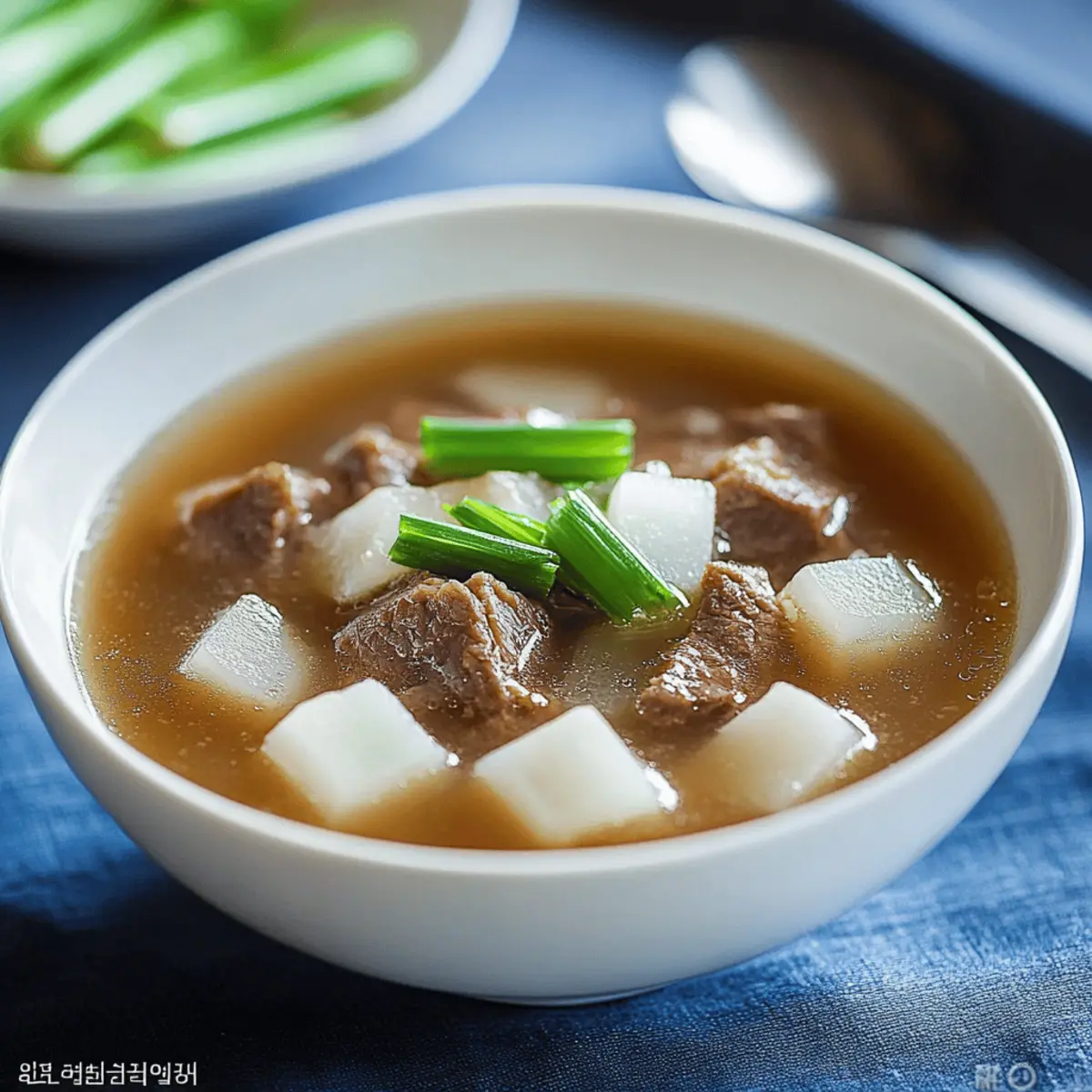
Comforting Korean Beef and Radish Soup for Cozy Nights
Ingredients
Equipment
Method
- Place the Korean boneless short ribs in a large pot and cover with 6 cups of water. Bring to a rolling boil over high heat, then reduce to medium-low and simmer for 40-45 minutes.
- Slice the Korean radish into thick discs, then into small squares. Set aside for later.
- Remove the beef from the pot. In the same pot, heat a tablespoon of sesame oil over medium heat. Add the diced radish and sauté for about 3 minutes until translucent.
- Return the broth back to the pot with the sautéed radish and bring to a gentle boil.
- Slice the cooked beef into bite-sized pieces and mix with sea salt, sesame oil, sesame seeds, guk ganjang, and minced garlic in a bowl.
- Add the seasoned beef back into the pot with the radish and broth; simmer gently for an additional 10-15 minutes.



Leave a Reply